Chrysanthemum Tea Benefits and Recipe: TCM Cooling Drink
- Chrysanthemum (菊花, jú huā) is one of TCM's most widely used cooling herbs, with documented functions of dispersing wind-heat, clearing liver fire, brightening the eyes, and calming the spirit (translated from Chinese).
Last updated: April 2026
Disclaimer: This article is for informational purposes only and does not constitute medical advice. Consult a qualified healthcare provider or licensed TCM practitioner before starting any new dietary therapy or herbal treatment.
Affiliate Disclosure: We may earn a commission when you purchase through our links. This does not affect our editorial independence.
Quick Answer
- Chrysanthemum (菊花, jú huā) is one of TCM's most widely used cooling herbs, with documented functions of dispersing wind-heat, clearing liver fire, brightening the eyes, and calming the spirit (translated from Chinese).
- There are 4 main varieties used in tea — Hangbaiju (杭白菊), Taiju (胎菊), Gongju (贡菊), and Jinsi Huangju (金丝皇菊) — each with distinct flavor profiles and slightly different therapeutic emphases (translated from Chinese).
- Chrysanthemum tea contains zero caffeine, making it suitable for evening consumption and for people who are caffeine-sensitive (translated from Chinese).
- At least 5 groups should avoid or limit chrysanthemum tea: people with spleen-stomach cold deficiency, pregnant women (in large amounts), people with pollen allergies, those taking blood-thinning medications, and people with low blood pressure (translated from Chinese).
Chrysanthemum tea is everywhere in China. It's the default "herbal tea" (花茶) at restaurants, the first thing a TCM practitioner suggests when you complain about red eyes or headaches, and one of the most common home remedies for what Chinese medicine calls "rising fire" (上火). You can buy it in teabags at any supermarket, in loose flower form at TCM pharmacies, or in ready-to-drink bottles at convenience stores.
But there's more to chrysanthemum tea than dropping flowers in hot water. The variety of chrysanthemum matters. The temperature of the water matters. What you combine it with matters. And whether your body actually needs a cooling tea — rather than a warming one — matters most of all.
This guide covers the TCM rationale behind chrysanthemum tea, the differences between varieties, proper preparation methods, therapeutic combinations for specific health goals, and who should think twice before drinking it daily.
What Makes Chrysanthemum a Medicinal Herb in TCM?
Chrysanthemum has been used in Chinese medicine for over 2,000 years. It appears in the Shennong Bencao Jing (神农本草经), one of TCM's foundational pharmacology texts, classified as a "superior" herb — meaning it's considered safe for long-term use with broad health-maintaining properties.
TCM Classification
- Nature (性): Slightly cold (微寒)
- Flavor (味): Sweet (甘) and bitter (苦)
- Meridian entry (归经): Lung (肺) and Liver (肝)
Primary TCM Functions
According to multiple Chinese sources including the Yantai Municipal Government health guide and the CCTV health portal (translated from Chinese):
-
Dispersing wind-heat (疏散风热): Chrysanthemum helps expel external wind-heat pathogens — the TCM explanation for symptoms like headache, mild fever, sore throat, and red eyes that accompany the early stages of a "hot" cold or flu.
-
Clearing liver fire and brightening eyes (清肝明目): This is perhaps chrysanthemum's most famous function. In TCM, the Liver opens to the eyes (肝开窍于目). When liver fire rises — from stress, anger, alcohol, or late nights — it manifests as red, dry, itchy, or blurry eyes. Chrysanthemum cools liver fire and directly benefits the eyes.
-
Clearing heat and detoxifying (清热解毒): The herb can help with inflammatory conditions associated with internal heat, including mouth sores, sore throat, swollen gums, and skin inflammation (translated from Chinese).
-
Calming the liver and extinguishing wind (平肝息风): Chrysanthemum helps control rising liver yang, which in TCM terms manifests as headaches (especially at the temples), dizziness, irritability, and high blood pressure.
-
Reducing blood pressure (降血压): Multiple Chinese health sources note chrysanthemum's traditional use for hypertension management, and modern research has explored its vasodilatory effects (translated from Chinese).
For more on the TCM concept of internal heat and cooling foods, see our detailed guide.
The 4 Main Types of Chrysanthemum for Tea
Not all chrysanthemum is the same. Chinese tea culture recognizes four primary varieties, each with its own character. A comprehensive comparison published on Zhihu details the key differences (translated from Chinese).
1. Hangbaiju (杭白菊) — The All-Rounder
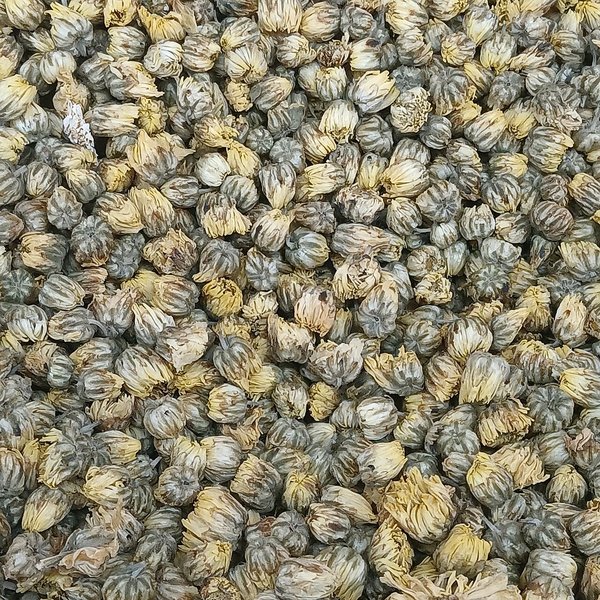 Image: Fumikas Sagisavas via Wikimedia Commons (CC0)
.jpg)
- Origin: Tongxiang, Zhejiang Province
- Appearance: Medium-sized, white petals with a yellow center
- Processing: Steamed then sun-dried, resulting in a slightly flattened, disc-like shape with flowers that clump together
- Flavor: Mildly sweet, smooth, pleasant — the most approachable variety
- TCM emphasis: Balances clearing liver fire and nourishing yin. Considered the most versatile chrysanthemum for daily drinking.
- Best for: General daily consumption, eye health maintenance, mild heat-clearing
2. Taiju (胎菊) — The Premium Pick
- Origin: Same as Hangbaiju (Tongxiang, Zhejiang) — because Taiju IS Hangbaiju, just harvested earlier
- Appearance: Small, tightly closed buds rather than open flowers
- Processing: Picked in October before the flowers open, then dried
- Flavor: Sweeter and more delicate than fully opened Hangbaiju, with a pale gold liquor and no bitterness
- TCM emphasis: Same as Hangbaiju but considered higher quality due to the concentrated essential oils in unopened buds
- Best for: Gift-giving, premium tea preparation, those who prefer a milder taste
- Price: Typically 1.5–3x the price of regular Hangbaiju (translated from Chinese)
3. Gongju (贡菊) — The Lung Clearer
- Origin: Huangshan region, Anhui Province (also called 黄山贡菊 or 徽州贡菊)
- Appearance: Individual flowers with longer, thinner petals, often with a greenish tinge
- Processing: Fresh flowers dried directly (not steamed), preserving more of the raw, pungent flavor
- Flavor: More bitter and "aggressive" than Hangbaiju — often requires added rock sugar or honey
- TCM emphasis: Stronger at clearing lung fire (清肺火) compared to Hangbaiju, which focuses more on liver fire. The heavier taste reflects a more potent medicinal character (translated from Chinese).
- Best for: Acute sore throat, respiratory heat, people who want stronger therapeutic effects
4. Jinsi Huangju (金丝皇菊) — The Show Stopper
- Origin: Various provinces, notably Jiangxi
- Appearance: Large, dramatic golden flowers that unfurl spectacularly in hot water — a single flower can fill a glass
- Flavor: Mild, slightly sweet, light honey-like notes
- TCM emphasis: Similar to Hangbaiju but with more emphasis on aesthetics. Some practitioners consider it slightly less medicinally potent than the traditional varieties.
- Best for: Visual presentation, photography, restaurant service, gift sets
Quick Selection Guide
| If you want... | Choose... |
|---|---|
| Daily drinking, general wellness | Hangbaiju or Taiju |
| Stronger sore throat / lung relief | Gongju |
| Eye health, stress headaches | Hangbaiju |
| Beautiful presentation | Jinsi Huangju |
| Gift for someone | Taiju (premium) or Jinsi Huangju (dramatic) |
How to Brew Chrysanthemum Tea Properly
Basic Chrysanthemum Tea
What you need:
- 5–8 dried chrysanthemum flowers (or 3–5g by weight)
- 250–300ml water at 80–90°C (175–195°F) — NOT boiling
- A cup with a lid or a glass teapot
Steps:
-
Rinse first. Pour a small amount of hot water over the flowers, swirl for 5 seconds, and discard the water. This removes dust and any residual agricultural chemicals. Multiple Chinese health sources emphasize this step (translated from Chinese).
-
Steep. Pour 80–90°C water over the rinsed flowers. Cover with a lid.
-
Wait 10 minutes. Chrysanthemum needs longer steeping than regular tea — the flowers need time to fully unfurl and release their compounds.
-
Drink warm. Can be re-steeped 2–3 times before the flavor fades significantly.
Why not boiling water? Water above 95°C can destroy some of the volatile aromatic compounds and make the tea more bitter than necessary. The slightly-below-boiling temperature extracts the beneficial flavonoids and polyphenols while preserving the delicate floral character.
Important: The First-Rinse Rule
The Commonhealth.com.tw health portal specifically recommends discarding the first brew to minimize pesticide residue exposure (translated from Chinese). This is particularly important for chrysanthemum, which is a heavily sprayed crop in conventional farming. Organic chrysanthemum is available but costs significantly more.
5 Therapeutic Chrysanthemum Tea Combinations
Chrysanthemum is often combined with other ingredients to target specific health concerns. These combinations come from TCM dietary therapy traditions and Chinese health portals (translated from Chinese).
1. Chrysanthemum + Goji Berry Tea (菊花枸杞茶) — Eyes and Liver
Image: Fumikas Sagisavas via Wikimedia Commons (CC0)
The single most popular chrysanthemum combination in all of Chinese tea culture.
- Ingredients: 5g chrysanthemum + 10g goji berries + 300ml hot water
- Steeping: 10–15 minutes, covered
- TCM rationale: Chrysanthemum clears liver fire (which causes red, dry eyes) while goji berries nourish liver and kidney yin (which sustains long-term eye health). Together they address both the excess (fire) and the deficiency (yin) aspects of eye problems.
- Best for: Screen workers, students, anyone experiencing eye strain or dryness
This combination connects directly to the broader role of goji berries in Chinese cuisine and TCM.
2. Chrysanthemum + Cassia Seed Tea (菊花决明子茶) — Blood Pressure and Eyes
Image: Fumikas Sagisavas via Wikimedia Commons (CC0)
- Ingredients: 3g chrysanthemum + 20g cassia seeds (决明子) + 10g goji berries + 500ml hot water
- Steeping: 15 minutes, covered
- TCM rationale: Cassia seed (决明子) clears liver fire, moistens intestines, and has demonstrated blood pressure-lowering effects. Combined with chrysanthemum, this is a classic TCM formula for managing early-stage hypertension through dietary therapy.
- Effect: Clears liver fire, nourishes yin, brightens eyes, lowers blood pressure and blood lipids (translated from Chinese)
- Note: Do not use cassia seed during pregnancy or with diarrhea-prone conditions.
3. Chrysanthemum + Hawthorn Tea (山楂菊花茶) — Digestion and Cholesterol
Image: Fumikas Sagisavas via Wikimedia Commons (CC0)
- Ingredients: 3g chrysanthemum + 12g dried hawthorn slices (山楂片) + 300ml hot water
- Steeping: 10–15 minutes
- TCM rationale: Hawthorn is one of TCM's premier digestive aids, particularly for greasy food stagnation. Combined with chrysanthemum, this tea aids digestion while also providing a cooling, slightly tart beverage that's popular after heavy meals (translated from Chinese).
4. Chrysanthemum + Honeysuckle Tea (菊花金银花茶) — Sore Throat and Inflammation
Image: Fumikas Sagisavas via Wikimedia Commons (CC0)
- Ingredients: 5g chrysanthemum + 5g honeysuckle flowers (金银花) + 300ml hot water
- Steeping: 10 minutes
- TCM rationale: Both are cold-natured, heat-clearing herbs. Together they pack a strong anti-inflammatory punch. This combination is popular during flu season and for acute sore throats.
- Caution: Very cooling — limit to 3–5 days of acute use. Not for daily long-term consumption if you have a cold constitution.
5. Chrysanthemum + Rose Tea (菊花玫瑰茶) — Stress and Mood
Image: Fumikas Sagisavas via Wikimedia Commons (CC0)
- Ingredients: 5g chrysanthemum + 5g dried rosebuds (玫瑰花) + 300ml hot water
- Steeping: 10 minutes
- TCM rationale: Rose moves liver qi (疏肝理气), addressing emotional stagnation, while chrysanthemum clears liver heat. Together they create a balancing formula for stress-related tension, irritability, and premenstrual moodiness.
For more therapeutic tea combinations, see our 15 medicinal tea recipes guide.
Who Should Avoid Chrysanthemum Tea? The 5 Groups at Risk
Chrysanthemum tea is generally safe for most people, but its cooling nature makes it problematic for certain groups. Both the People's Daily health section and CCTV health portal have published detailed warnings (translated from Chinese).
1. People with Spleen-Stomach Cold Deficiency (脾胃虚寒)
If you frequently experience cold hands and feet, bloating after eating cold foods, loose stools, pale complexion, and fatigue, your TCM pattern likely involves cold in the Spleen and Stomach. Chrysanthemum's cold nature will worsen these symptoms. Drinking it regularly can cause stomach discomfort, diarrhea, and increased bloating (translated from Chinese).
Alternative: Try warming teas like ginger tea or red date tea instead.
2. People with Yang Deficiency Constitution
Yang deficiency goes beyond cold spleen-stomach — it's a constitutional pattern of overall coldness, low energy, and reduced metabolic function. Our yang deficiency constitution guide explains this pattern in detail. Adding a strongly cooling tea like chrysanthemum will further deplete yang energy.
3. Pregnant Women (Excessive Consumption)
Small amounts of chrysanthemum tea are generally considered acceptable during pregnancy, but regular or heavy consumption is cautioned against due to the herb's cold nature, which could theoretically affect blood flow to the uterus. Consult your healthcare provider.
4. People with Chrysanthemum or Ragweed Allergies
Image: Fumikas Sagisavas via Wikimedia Commons (CC0)
Chrysanthemum belongs to the Asteraceae family, which also includes ragweed, dahlias, and marigolds. People with pollen allergies — particularly to ragweed — may experience cross-reactive allergies to chrysanthemum. Symptoms can include itchy throat, skin rash, sneezing, and in rare cases, more severe reactions.
5. People Taking Blood-Thinning or Blood Pressure Medications
Chrysanthemum has mild anticoagulant and vasodilatory properties. Combined with prescription blood thinners (warfarin, heparin) or antihypertensive medications, it could potentially amplify these effects. Inform your doctor if you drink chrysanthemum tea regularly and are on these medications.
Chrysanthemum in the Broader TCM Seasonal Framework
In TCM's seasonal theory, chrysanthemum is particularly associated with autumn. The Double Ninth Festival (重阳节, the 9th day of the 9th lunar month, usually in October) has a centuries-old tradition of drinking chrysanthemum wine and tea — a practice rooted in TCM's understanding that autumn brings dryness and that the Lung meridian (which chrysanthemum enters) needs support during this season (translated from Chinese).
But chrysanthemum's cooling properties also make it valuable in summer, when internal heat peaks. Many Chinese households keep a pitcher of chilled chrysanthemum tea in the refrigerator throughout the summer months, treating it as a daily cooling beverage — similar to how lemonade functions in Western households.
For those interested in the full seasonal framework, our Chinese food therapy seasonal eating calendar maps out which foods and teas are most appropriate throughout the year. The 24 solar terms and TCM food traditions guide provides even more granular seasonal guidance.
How to Use Chrysanthemum Beyond Tea
Chrysanthemum's culinary and therapeutic uses extend beyond tea. Chinese food culture incorporates the flower in several other ways (translated from Chinese).
Chrysanthemum Congee (菊花粥)
A traditional breakfast preparation that appears in classical TCM dietary texts. Cook rice porridge as normal, then add 10–15g of chrysanthemum flowers in the last 10 minutes of cooking. Season with a small amount of rock sugar. This congee is recommended for people with chronic eye strain, headaches, and mild hypertension who want the benefits of chrysanthemum in a more substantial, nourishing format. For more congee-based therapy, see our medicinal porridge recipes guide.
Chrysanthemum Wine (菊花酒)
A centuries-old tradition associated with the Double Ninth Festival. Chrysanthemum flowers are steeped in rice wine or baijiu for several weeks. The resulting wine is consumed in small amounts (30–50ml) and is believed to disperse wind, clear the head, and promote longevity. While not a daily health practice, it demonstrates the depth of chrysanthemum's role in Chinese food culture.
Chrysanthemum in Cooking
Fresh chrysanthemum petals are used in certain regional cuisines — scattered over salads in Cantonese cooking, added to hot pot broths, or used as an edible garnish. The petals add a mild, slightly bitter floral note that complements rich or fatty dishes, providing a natural "heat-clearing" balance to heavy meals.
Chrysanthemum Pillow (菊花枕)
Not a food use, but worth mentioning: dried chrysanthemum flowers are traditionally used as pillow filling, believed to clear head-heat, improve sleep quality, and relieve eye strain overnight. The aromatic volatile compounds released from the flowers during sleep are thought to enter through the nose and affect the Liver meridian, promoting a calm, cool sleep.
Chrysanthemum Tea in Modern TCM Practice
Contemporary TCM practitioners in China continue to prescribe chrysanthemum as part of treatment protocols. Its role has expanded with modern lifestyles:
Screen Eye Fatigue (视屏眼疲劳)
With the average Chinese adult now spending 6+ hours daily on screens, chrysanthemum-goji berry tea has become the standard TCM recommendation for digital eye strain. Many Chinese companies provide chrysanthemum tea bags in office break rooms — it's considered a basic workplace wellness provision. The rationale aligns perfectly with chrysanthemum's liver-clearing and eye-brightening properties.
Stress-Related Symptoms
TCM sees stress as primarily affecting the Liver system. When liver qi stagnates, it often transforms into liver fire, which rises upward causing headaches, irritability, insomnia, eye problems, and a flushed face. Chrysanthemum's ability to clear liver fire makes it a front-line remedy for stress-related symptoms in modern TCM practice.
Post-Alcohol Recovery
After heavy drinking, which TCM considers extremely "heating" and damaging to the Liver, chrysanthemum tea is commonly consumed to clear the resulting liver heat. Many Chinese people drink chrysanthemum tea the morning after alcohol consumption as a cooling, liver-supportive remedy.
Buying and Storing Chrysanthemum
What to Look For
- Intact flowers: Broken, crumbled flowers indicate rough handling or old stock
- Fragrance: Should smell distinctly floral and slightly sweet. Stale chrysanthemum loses its aroma
- Color: Hangbaiju should be off-white to pale yellow. Gongju may have greenish-yellow tones. Avoid chrysanthemum that's unnaturally bright white (possible sulfur bleaching) or very brown (old stock)
- Dryness: Should be thoroughly dry and crisp, not soft or damp
Storage
- Airtight container, away from light and moisture
- Room temperature is fine; refrigeration not necessary
- Shelf life: 12–18 months when properly stored
- Discard if the flowers develop a musty smell, visible mold, or lose their fragrance entirely
Price Ranges
- Hangbaiju: $8–15 per 100g
- Taiju: $12–25 per 100g
- Gongju: $10–18 per 100g
- Jinsi Huangju: $15–30 per 100g
Prices vary significantly by grade. Premium, organic-certified chrysanthemum from named origin regions commands the highest prices. For sourcing tips, see our best Chinese herb shops guide.
Chrysanthemum Tea for Children and the Elderly
Two groups deserve special consideration when it comes to chrysanthemum tea (translated from Chinese).
Children (Ages 3+)
Chrysanthemum tea is widely given to children in Chinese households, particularly during hot weather or when children show signs of "internal heat" — red eyes, mouth sores, irritability, constipation. The caffeine-free nature makes it appropriate for children where regular tea would not be.
Guidelines for children:
- Ages 3–6: Use half the adult amount (2–3 flowers per cup). Serve at room temperature, not hot.
- Ages 7–12: Use adult amount but limit to 1 cup per day maximum.
- Frequency: 2–3 times per week during summer. Not recommended for daily consumption in children due to their developing digestive systems being more sensitive to cooling herbs.
- Warning signs: If a child develops loose stools or stomach discomfort after drinking chrysanthemum tea, the tea is too cooling for their constitution. Stop and switch to milder options.
For more on Chinese food therapy adapted for children, see our pediatric guide.
Elderly Individuals
Elderly people often develop what TCM calls "upper heat, lower cold" (上热下寒) — heat symptoms in the upper body (dry eyes, headaches, sore throat) combined with cold symptoms in the lower body (cold feet, weak knees, frequent urination). Chrysanthemum tea addresses the upper heat but can worsen the lower cold.
The solution is strategic pairing:
- Chrysanthemum + goji berries: The goji berries' warming, kidney-nourishing properties counterbalance the chrysanthemum's cooling effect
- Chrysanthemum + red dates: Dates warm the middle and strengthen the spleen, preventing the chrysanthemum from depleting digestive warmth
- Small amounts more frequently: Rather than one large cup, sip small amounts throughout the day
Elderly individuals on multiple medications should always check with their healthcare provider before adding chrysanthemum tea as a regular habit, due to potential herb-drug interactions mentioned earlier.
How Chrysanthemum Compares to Other TCM Cooling Teas
Chrysanthemum isn't the only cooling herbal tea in the TCM toolkit. Here's how it stacks up against other popular options.
| Tea | Nature | Primary Function | Best For | Caffeine |
|---|---|---|---|---|
| Chrysanthemum (菊花) | Slightly cold | Clear liver, brighten eyes | Eye strain, headaches, mild heat | None |
| Honeysuckle (金银花) | Cold | Clear heat-toxin | Sore throat, fever, infections | None |
| Monk fruit (罗汉果) | Cool | Moisten lungs, stop cough | Cough, throat dryness | None |
| Lotus leaf (荷叶) | Neutral-cool | Clear summer-heat | Summer heat, weight management | None |
| Green tea (绿茶) | Cool | Clear heat, aid digestion | Alertness + mild cooling | Yes |
| Peppermint (薄荷) | Cool | Release exterior, clear head | Nasal congestion, headaches | None |
Chrysanthemum occupies a middle ground — not as aggressively cold as honeysuckle, not as mild as lotus leaf. This balance is what makes it suitable for regular drinking rather than just acute therapeutic use.
The Science Behind Chrysanthemum's Bioactive Compounds
While TCM describes chrysanthemum's effects through the language of meridians and organ systems, modern phytochemistry has identified specific compounds responsible for many of the observed effects (translated from Chinese).
Flavonoids
Chrysanthemum is rich in flavonoids — including luteolin, apigenin, and acacetin — which are potent antioxidants with documented anti-inflammatory, neuroprotective, and vasodilatory properties. These compounds likely underlie the traditional claims about eye health and blood pressure reduction.
Volatile Oils
The distinctive fragrance of chrysanthemum comes from volatile terpenoid compounds. These are the reason chrysanthemum tea is traditionally described as "calming the spirit" (安神) — aromatic compounds can affect mood and stress response through olfactory pathways.
Chlorogenic Acid
A phenolic compound with anti-inflammatory and antimicrobial properties. This likely contributes to chrysanthemum's effectiveness for sore throat and mouth sores.
Amino Acids and Vitamins
Chrysanthemum contains small amounts of various amino acids, vitamin A precursors, and B vitamins. While the quantities in a cup of tea are modest, regular consumption contributes to overall micronutrient intake.
What Research Shows
Laboratory and animal studies have demonstrated chrysanthemum extracts' ability to lower blood pressure in hypertensive models, reduce inflammatory markers, protect liver cells from toxic damage, and inhibit certain bacterial strains. Human clinical trials are more limited, but the breadth of traditional use across 2,000+ years, combined with a growing body of pharmacological evidence, supports chrysanthemum's position as a genuinely therapeutic herb rather than merely a pleasant-tasting flower tea.
The gap between traditional knowledge and modern validation is narrowing. What TCM described as "clearing liver fire" maps reasonably well onto what pharmacology describes as "anti-inflammatory and hepatoprotective effects." What TCM called "brightening the eyes" corresponds with the antioxidant protection of retinal cells demonstrated in laboratory studies.
Frequently Asked Questions
Can I drink chrysanthemum tea every day? For people with a balanced or slightly warm constitution, daily consumption of 3–5g of chrysanthemum in tea is generally considered safe by Chinese medicine standards. However, if you have a cold constitution (cold hands/feet, frequent diarrhea, pale tongue), daily consumption is not recommended. Even for warm-constitution individuals, taking 1–2 days off per week is a common TCM suggestion to prevent excessive cooling (translated from Chinese).
Does chrysanthemum tea have caffeine? No. Chrysanthemum tea is completely caffeine-free, making it suitable for evening consumption and for children (in moderate amounts). This is one of its advantages over green tea for people who want a cooling beverage without the stimulant effect. Multiple Taiwanese health portals confirm the zero-caffeine status (translated from Chinese).
Can I add honey to chrysanthemum tea instead of rock sugar? Yes, and many TCM practitioners actually prefer honey for its additional throat-soothing and lung-moistening properties. However, add honey only after the tea has cooled to below 60°C (140°F) — heat destroys some of honey's beneficial enzymes. Never add honey to boiling or very hot water.
Is chrysanthemum tea safe during breastfeeding? Small to moderate amounts are generally considered acceptable, but because chrysanthemum is cooling, excessive consumption could theoretically affect breast milk quality according to TCM theory (which holds that maternal diet influences breast milk's thermal nature). Consult your healthcare provider or a TCM practitioner for personalized guidance.
What's the difference between chrysanthemum tea and chamomile tea? Despite sometimes being confused, they're completely different plants from different genera. Chrysanthemum (Chrysanthemum morifolium) is used in TCM and has a distinctly floral, slightly bitter taste. Chamomile (Matricaria chamomilla) is used in Western herbal medicine and has a sweet, apple-like taste. Their therapeutic profiles overlap slightly (both are calming), but chrysanthemum's liver-clearing and eye-brightening functions have no equivalent in chamomile's traditional uses.
Sources
- Baidu Baike: "菊花茶" (translated from Chinese) [https://baike.baidu.com/item/%E8%8F%8A%E8%8A%B1%E8%8C%B6/361]
- Commonhealth.com.tw: "菊花茶無咖啡因含6大功效" (translated from Chinese) [https://www.commonhealth.com.tw/article/88061]
- TVBS Health: "菊花茶功效:泡法、禁忌" (translated from Chinese) [https://health.tvbs.com.tw/regimen/354664]
- Yantai Municipal Government: "一杯菊花茶 堪比百味药" (translated from Chinese) [https://www.yantai.gov.cn/art/2023/8/14/art_83600_3143279.html]
- People's Daily Health: "菊花茶清肝明目 五类人不宜喝" (translated from Chinese) [http://health.people.com.cn/n1/2016/0512/c21471-28344126.html]
- CCTV Health: "菊花茶清肝明目 五类人不宜喝" (translated from Chinese) [http://jiankang.cctv.com/2016/05/13/ARTICjgM5uTWejHpcExIA6WF160513.shtml]
- DayHealth.tw: "菊花茶功效大全" (translated from Chinese) [https://www.dayhealth.tw/chrysanthemum-tea/]
- Zhihu: "菊花茶有什么功效与价值" (translated from Chinese) [https://www.zhihu.com/question/640482214]
- Zhihu: "贡菊、杭白菊、胎菊的区别" (translated from Chinese) [https://zhuanlan.zhihu.com/p/151322642]
- Beijing News: "巧识巧用菊花" (translated from Chinese) [https://news.bjd.com.cn/2021/11/11/10004146.shtml]
- Chang Gung Hospital Health Newsletter: "九九重陽清秋節" (translated from Chinese) [https://www.cch.org.tw/edm_3.aspx?Id=434]
— The Yao Shan Guide Team