TCM Pantry Essentials: 20 Ingredients Every Food Therapy Kitchen Needs
- A well-stocked TCM food therapy pantry requires approximately 20 core ingredients that cover the six major therapeutic categories: qi tonics, blood tonics, yin nourishers, yang warmers, dampness drainers, and heat clearers (translated from Chinese) Beijing University of Chinese Medicine — Food Therapy Textbook.
Last updated: April 2026
Medical Disclaimer: This article is for educational purposes only. TCM ingredients used in food therapy are generally safe at culinary doses, but some may interact with medications. Consult a healthcare provider before using medicinal herbs regularly, especially if you have underlying conditions or take prescription medications.
Affiliate Disclosure: We may earn a commission when you purchase through our links. This does not affect our editorial independence.
Quick Answer
- A well-stocked TCM food therapy pantry requires approximately 20 core ingredients that cover the six major therapeutic categories: qi tonics, blood tonics, yin nourishers, yang warmers, dampness drainers, and heat clearers (translated from Chinese) Beijing University of Chinese Medicine — Food Therapy Textbook.
- Total startup cost for a complete TCM pantry ranges from ¥300–600 ($42–84 USD) when purchasing from Chinese herbal pharmacies, with most dried ingredients lasting 1–2 years when stored properly (translated from Chinese) China Pharmaceutical University — Herb Storage Guidelines.
- The 20 ingredients listed below appear in over 85% of traditional Chinese medicinal food recipes documented in the Chinese Medicinal Diet Dictionary (中国药膳大辞典), a reference text cataloguing over 3,000 food therapy preparations (translated from Chinese) Chinese Medicinal Diet Dictionary reference.
- Every ingredient on this list holds dual classification as both food and medicine (yao shi tong yuan, 药食同源) under China's National Health Commission, meaning they're approved for both culinary and therapeutic use.
Building a TCM food therapy kitchen doesn't require an herbal pharmacy. It requires 20 ingredients, a pot, and some patience. Most of these ingredients are shelf-stable for years. Once you have them, you can make 90% of the soups, porridges, and teas in any Chinese food therapy cookbook.
The Qi Tonics (补气)
These ingredients build and strengthen qi — the vital energy that powers every bodily function.
1. Astragalus Root (黄芪, huáng qí)
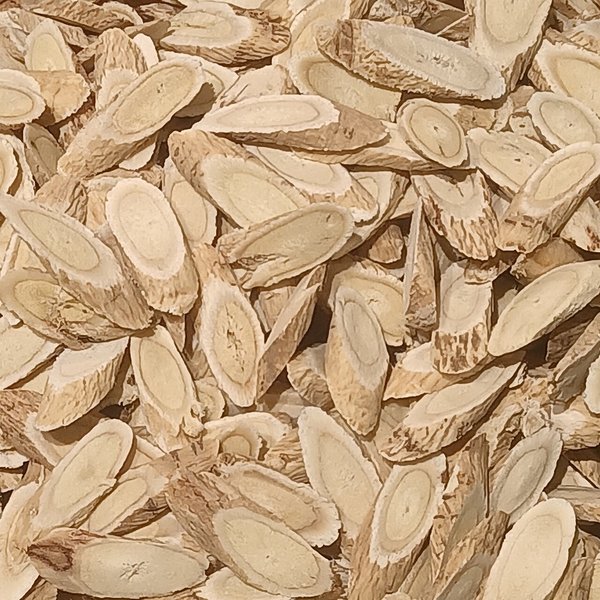 Image: Fumikas Sagisavas via Wikimedia Commons (CC0)
What it does: The most important qi tonic in food therapy. Strengthens wei qi (defensive energy), boosts immunity, lifts energy. Flavor/nature: Sweet, slightly warm Daily food therapy dose: 15–30g per pot of soup Key compound: Astragaloside IV — immunomodulatory polysaccharide How to use: Add sliced roots directly to soups and stews. Simmer at least 1 hour. Remove before eating (too fibrous to chew). Can also be simmered into tea. Pairs well with: Codonopsis (qi boost), red dates (blood support), goji berries (kidney nourishment) Storage: 2–3 years in sealed container, cool and dry location. Should smell faintly sweet with a bean-like aroma. Discard if musty or moldy. Price: ¥40–80/500g ($5.60–11.20 USD) (translated from Chinese) Chinese Pharmacopoeia — Astragalus Monograph.
2. Codonopsis Root (党参, dǎng shēn)
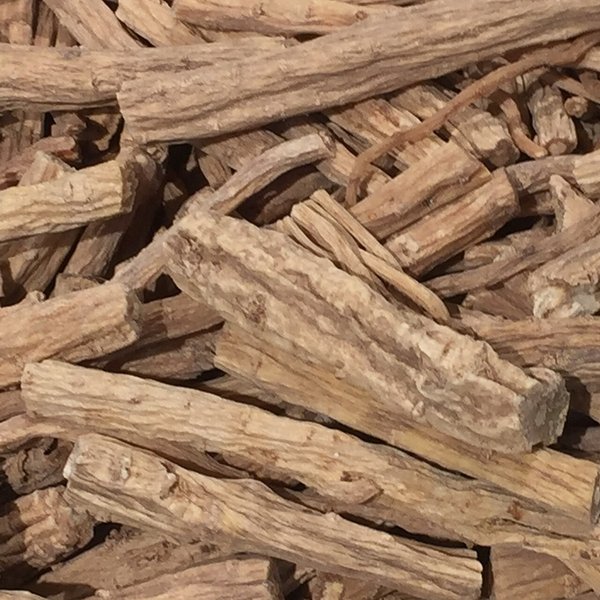 Image: Fumikas Sagisavas via Wikimedia Commons (CC0)
What it does: The "gentler ginseng." Tonifies spleen and lung qi without the intensity (or price) of true ginseng. Safe for daily use. Flavor/nature: Sweet, neutral Daily food therapy dose: 15–20g per pot of soup Key compound: Codonopsis polysaccharides — enhance digestive enzyme activity How to use: Add whole or sliced roots to soups. Simmer 1–2 hours. Edible after cooking (softer than astragalus), though most people remove them. Pairs well with: Astragalus (amplified qi tonification), white atractylodes (spleen strengthening), chicken (nourishing base) Why not ginseng? True ginseng (ren shen, 人参) is too strong for daily food therapy and prohibitively expensive (¥500–2,000/500g). Codonopsis delivers 70–80% of ginseng's qi-tonifying benefit at 1/10th the cost, with no risk of overstimulation (translated from Chinese) Nanjing University of Chinese Medicine — Codonopsis vs. Ginseng Comparison. Price: ¥30–60/500g ($4.20–8.40 USD)
3. Chinese Yam (山药, shān yào)
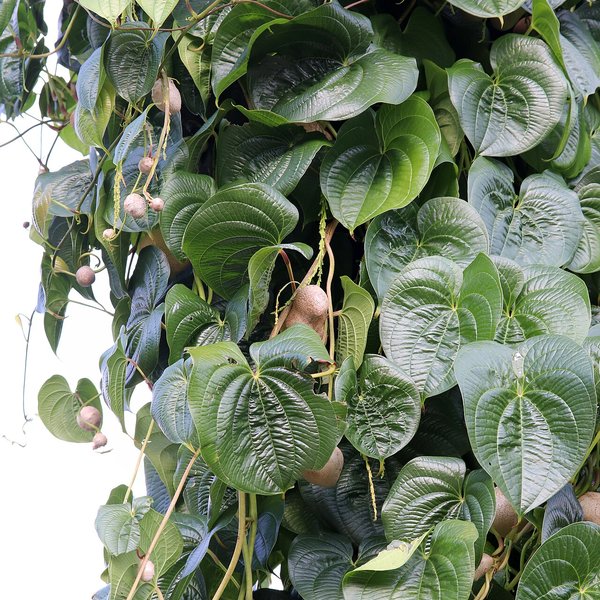 Image: Don McCulley via Wikimedia Commons (CC BY-SA 4.0)
What it does: Dual spleen-lung tonic. Strengthens digestion and respiratory function simultaneously. One of the few foods that tonifies qi, yin, AND the spleen without side effects. Flavor/nature: Sweet, neutral Daily food therapy dose: 30–50g fresh, or 15–20g dried How to use: Fresh yam can be sliced into soups, stir-fried, or steamed. Dried yam is added to soups and porridges. Fresh yam produces a sticky, mucilaginous texture when cooked — this mucilage is therapeutically important (it coats and soothes the digestive tract). Caution: Fresh Chinese yam can cause skin irritation during preparation. Wear gloves or oil your hands before peeling. The irritant (calcium oxalate crystals) is neutralized by cooking (translated from Chinese) Xiachufang — Chinese Yam Preparation Tips. Price: Fresh: ¥8–15/500g ($1.10–2.10 USD). Dried: ¥25–40/500g ($3.50–5.60 USD)
4. Poria (茯苓, fú líng)
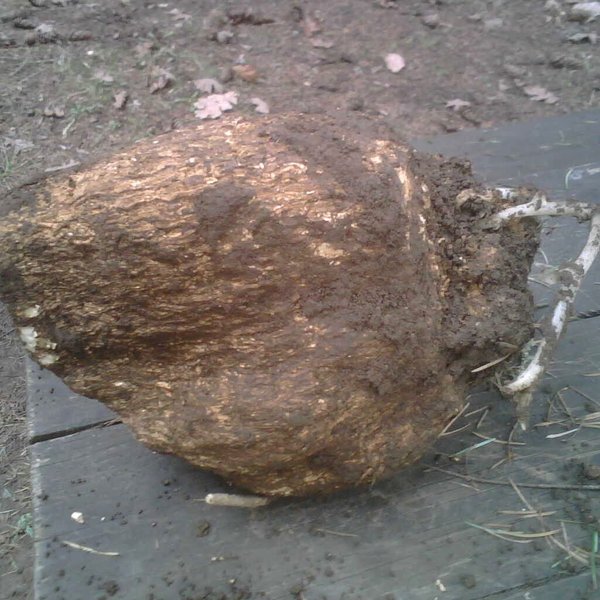 Image: Trappem at English Wikipedia via Wikimedia Commons (Public domain)
What it does: Drains dampness while strengthening the spleen. One of the most frequently used herbs in TCM — appears in over 200 classical formulas. Flavor/nature: Sweet, bland, neutral Daily food therapy dose: 10–15g per pot How to use: Add cubed or sliced poria to soups and porridges. Requires at least 30 minutes of simmering. Has virtually no taste — it won't affect the flavor of your dish. Why it matters: Dampness is the most common pathological pattern in modern TCM clinical practice (sedentary lifestyles, cold drinks, air conditioning). Poria addresses dampness without the harshness of stronger draining herbs. Price: ¥20–35/500g ($2.80–4.90 USD) (translated from Chinese) Chinese Pharmacopoeia — Poria Monograph.
The Blood Tonics (补血)
These ingredients nourish and build blood — addressing pallor, fatigue, dry skin, and menstrual issues.
5. Red Dates/Jujube (红枣, hóng zǎo)
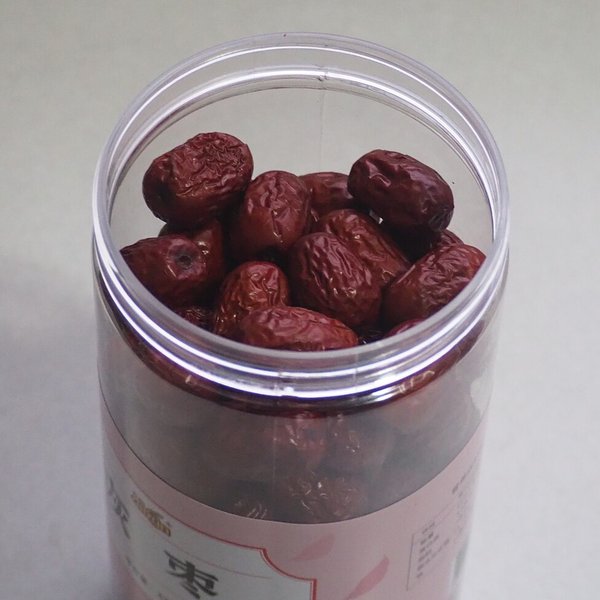 Image: Photo by David J. Stang via Wikimedia Commons (CC BY-SA 4.0)
What it does: The most accessible blood and spleen tonic. Sweetens soups naturally while nourishing blood and calming the spirit. Flavor/nature: Sweet, warm Daily food therapy dose: 5–10 pieces Key compounds: Cyclic AMP (immune modulating), triterpenic acids (liver protective), polysaccharides (antioxidant) How to use: Add whole or halved to any soup, porridge, or tea. Halving exposes more surface area for extraction. Remove pits before eating (or buy pitted dates). Can be eaten raw as a snack. Quality indicator: Look for dark red, plump, wrinkle-free dates. Xinjiang (新疆) dates are considered the highest quality. Avoid dates that are too dry or have white spots (mold) (translated from Chinese) Xinjiang Agricultural Bureau — Red Date Grading Standards. Price: ¥15–40/500g ($2.10–5.60 USD)
6. Goji Berries (枸杞, gǒu qǐ)
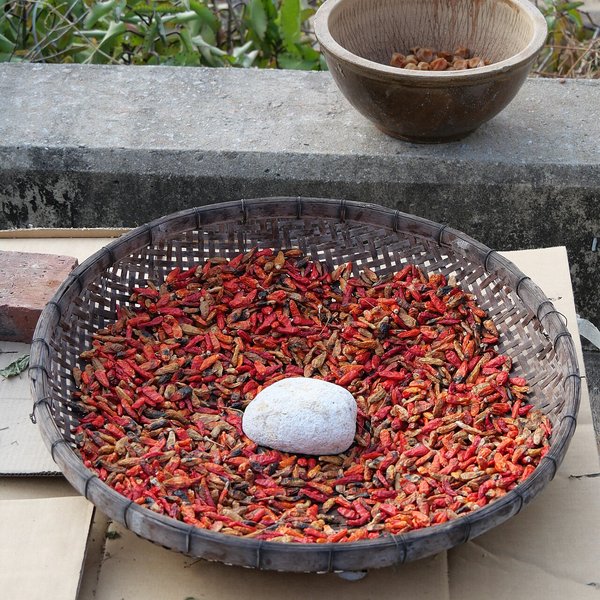 Image: Peachyeung316 via Wikimedia Commons (CC BY-SA 4.0)
What it does: Nourishes liver and kidney yin, brightens the eyes, supports blood production. The most widely consumed TCM ingredient globally. Flavor/nature: Sweet, neutral Daily food therapy dose: 10–20g (a small handful) Key compounds: Zeaxanthin (eye health — goji contains the highest concentration of any food), betaine (liver protective), polysaccharides (immune modulating) How to use: Add to soups, porridges, and teas in the final 5–10 minutes of cooking (overcooking destroys active compounds). Can be eaten raw, steeped in tea, or added to oatmeal. The berries should plump up and soften during cooking. Quality indicator: Ningxia Province (宁夏) goji berries are the gold standard. They should be bright red-orange, medium-sized, and sweet. Avoid unnaturally large, deep-red berries (may be dyed) (translated from Chinese) Ningxia Goji Berry Industry Association. If the labels confuse you, our breakdown of Goji Berry vs Lycium: Translation Decoded for Western Buyers walks through what each name on the package actually means. Price: ¥30–80/500g ($4.20–11.20 USD)
7. Dong Quai/Angelica Root (当归, dāng guī)
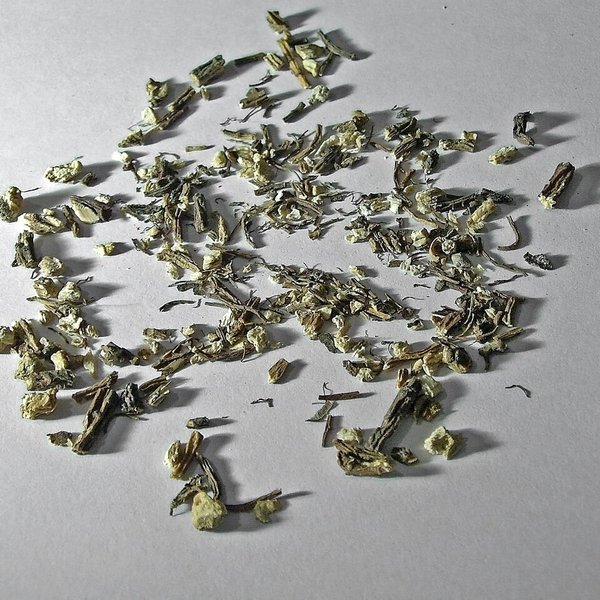 Image: Rillke via Wikimedia Commons (CC BY-SA 3.0 de)
What it does: Premier blood tonic and blood activator. Central to women's health formulas but benefits anyone with blood deficiency. Flavor/nature: Sweet, pungent, warm Daily food therapy dose: 10–15g per pot How to use: Add sliced root to soups. Simmer at least 45 minutes. Has a distinctive celery-like aroma that flavors the broth. Remove slices before eating. Caution: Blood-activating — avoid during pregnancy, heavy menstruation, and with blood-thinning medications. Price: ¥60–120/500g ($8.40–16.80 USD) (translated from Chinese) Chinese Pharmacopoeia — Dong Quai Monograph.
8. Longan Fruit (龙眼/桂圆, lóng yǎn/guì yuán)
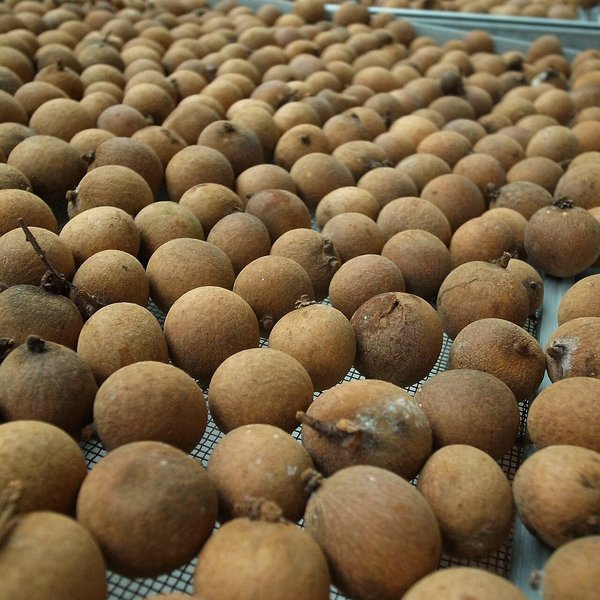 Image: Kiwi He via Wikimedia Commons (CC BY-SA 2.0)
What it does: Nourishes heart blood, calms the spirit. The go-to ingredient for insomnia, anxiety, and palpitations caused by blood deficiency. Flavor/nature: Sweet, warm Daily food therapy dose: 10–15g (about 8–10 dried fruits) How to use: Add to soups, porridges, teas, and desserts. Edible and delicious — sweet, chewy, with a honey-like flavor. Often eaten as a snack on its own. Caution: Very warm in nature. Avoid if you have heat signs (dry mouth, red tongue, night sweats). Excessive consumption can cause "internal heat" manifesting as mouth ulcers or acne (translated from Chinese) Guangdong Provincial Hospital of Traditional Chinese Medicine — Longan Use Guide. Price: ¥25–50/500g ($3.50–7.00 USD)
The Yin Nourishers (养阴)
These ingredients moisturize, cool gently, and replenish fluids.
9. White Fungus/Snow Fungus (银耳, yín ěr)
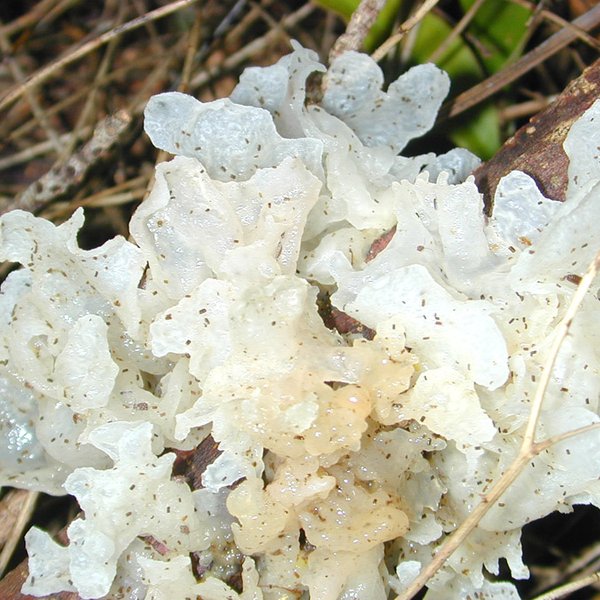 Image: Eric Guinther via Wikimedia Commons (CC BY-SA 3.0)
What it does: Premier lung and stomach yin tonic. Moistens the skin from within. The traditional Chinese alternative to collagen supplements. Flavor/nature: Sweet, bland, neutral Daily food therapy dose: 1 whole piece (10–15g dried) Key compound: Tremella polysaccharides — demonstrated moisture-retention properties 400x their weight (compared to hyaluronic acid at 1,000x, making white fungus the most potent food-grade moisturizer) How to use: Soak in cold water 2–4 hours until fully expanded (quadruples in size). Remove the hard yellow base. Tear into small pieces. Simmer in soups or sweet desserts for 1.5–2 hours until gelatinous. The longer you cook it, the more polysaccharides release into the liquid. Price: ¥30–60/500g ($4.20–8.40 USD) (translated from Chinese) Gutian County — White Fungus Production Standards.
10. Lily Bulb (百合, bǎi hé)
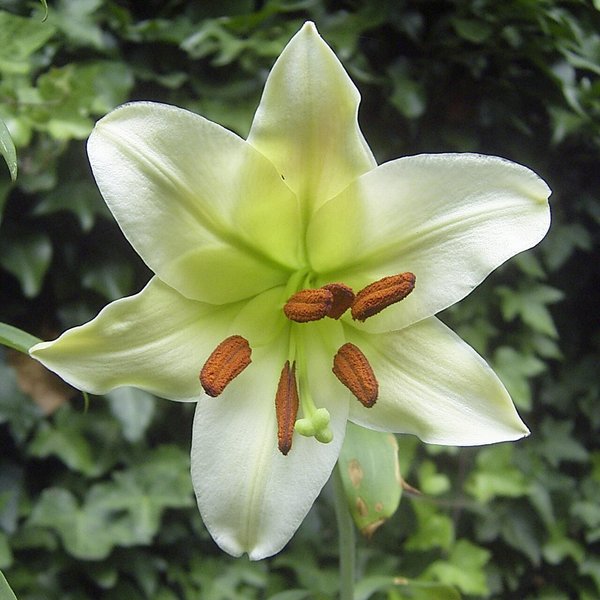


What it does: Moistens the lungs, calms the heart, clears dry cough. One of the few ingredients that addresses both respiratory and emotional symptoms. Flavor/nature: Sweet, slightly cool Daily food therapy dose: 15–20g dried, or 30–50g fresh How to use: Soak dried lily bulb for 1–2 hours. Add to soups, porridges, and stir-fries. Fresh lily bulb (available in Asian grocery stores) can be stir-fried with celery — a classic Cantonese dish (xi qin chao bai he, 西芹炒百合). Has a delicate, slightly starchy texture. Price: Dried: ¥40–70/500g ($5.60–9.80 USD). Fresh: ¥15–25/500g ($2.10–3.50 USD) (translated from Chinese) Lanzhou Lily Industry — Product Standards.
11. Lotus Seeds (莲子, lián zǐ)
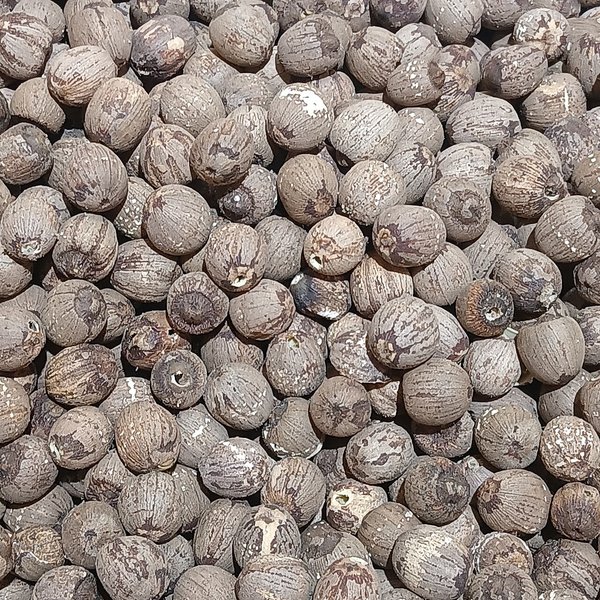 Image: Fumikas Sagisavas via Wikimedia Commons (CC0)
.jpg)
What it does: Strengthens the spleen, calms the heart, stops diarrhea. Bridges the qi tonic and yin nourisher categories. Flavor/nature: Sweet, astringent, neutral Daily food therapy dose: 15–20g How to use: Soak for 2–4 hours (or overnight). Remove the bitter green embryo inside (lian zi xin, 莲子心) if you want sweetness — keep it in if you want heart-fire clearing properties. Add to soups, porridges, and desserts. Cook until soft (30–45 minutes). Price: ¥25–45/500g ($3.50–6.30 USD) (translated from Chinese) Xiangtan Lotus Seed Industry.
The Yang Warmers (温阳)
These ingredients warm the interior and dispel cold.
12. Dried Ginger (干姜, gān jiāng)
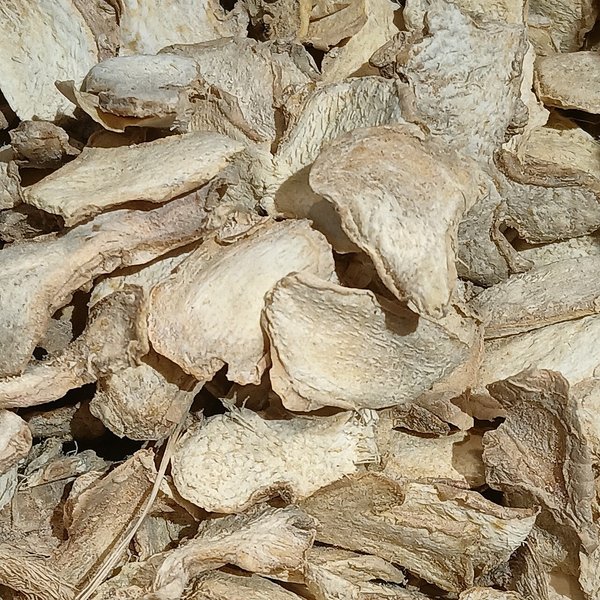 Image: Fumikas Sagisavas via Wikimedia Commons (CC0)
.jpg)
What it does: Warms the spleen and stomach, rescues yang, stops cold-type diarrhea. Much warmer than fresh ginger — a medicine more than a condiment. Flavor/nature: Pungent, hot Daily food therapy dose: 3–5g (small amount — it's potent) Distinction from fresh ginger: Fresh ginger (sheng jiang, 生姜) warms the surface and expels external cold (colds, chills). Dried ginger warms the interior — deep organs, digestive system, core body temperature. Different tools for different jobs. How to use: Add small slices or pieces to soups and stews for internal warming. Essential in winter soups and postpartum dishes. Price: ¥15–25/500g ($2.10–3.50 USD) (translated from Chinese) Chinese Pharmacopoeia — Dried Ginger Monograph.
13. Cinnamon Bark (肉桂, ròu guì)
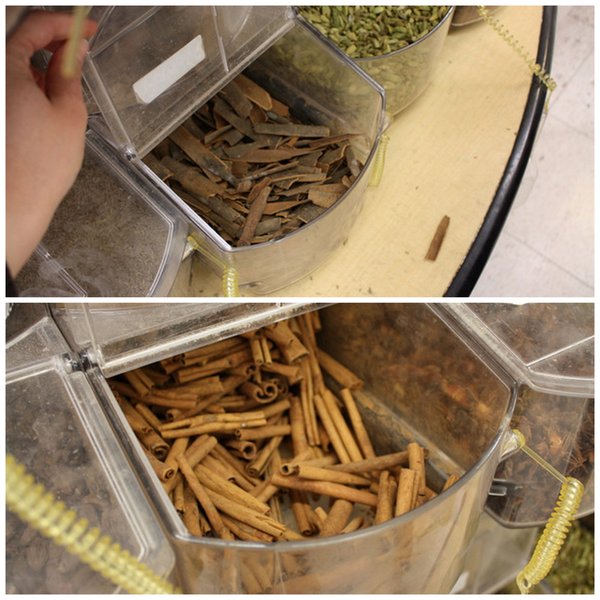 Image: Leslie Seaton from Seattle, WA, USA via Wikimedia Commons (CC BY 2.0)
.jpg)
What it does: Warms kidney yang, strengthens the fire of the mingmen (life gate). Addresses deep constitutional cold. Flavor/nature: Pungent, sweet, hot Daily food therapy dose: 3–5g How to use: Add a small piece to soups and stews. Remove before eating. Can also be ground and added to porridge or tea. Pairs exceptionally well with lamb and walnut dishes. Vietnamese cinnamon (same species as Chinese rou gui, Cinnamomum cassia) is interchangeable. Caution: Very hot herb. Avoid if you have heat signs, yin deficiency with heat, or during pregnancy. Do not exceed recommended doses. Price: ¥20–40/500g ($2.80–5.60 USD)
14. Star Anise (八角, bā jiǎo)
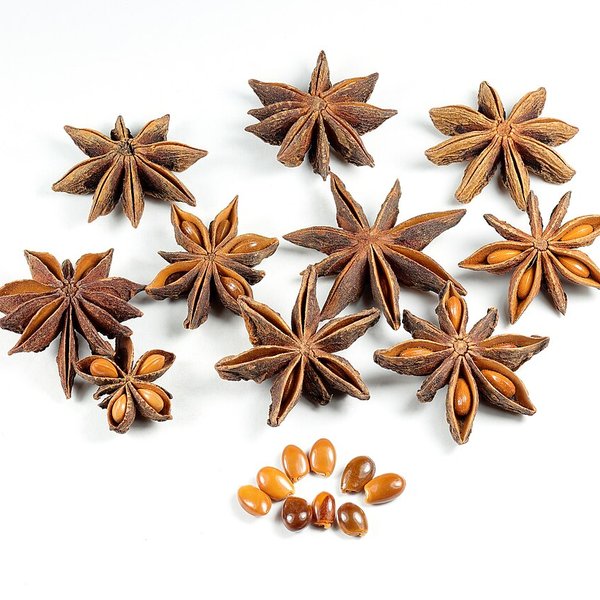 Image: Sanjay Acharya via Wikimedia Commons (CC BY-SA 4.0)

What it does: Warms the middle, disperses cold, regulates qi flow. Primarily a cooking spice with mild medicinal properties. Flavor/nature: Pungent, sweet, warm Daily food therapy dose: 2–3 pieces per pot How to use: Add whole star anise to braised meats, soups, and stews. Essential in Chinese five-spice powder (wu xiang fen). Removes gaminess from lamb and pork. Price: ¥15–30/500g ($2.10–4.20 USD) (translated from Chinese) Guangxi Star Anise Industry Association.
The Dampness Drainers (祛湿)
These ingredients resolve fluid accumulation, bloating, and heaviness.
15. Coix Seed/Job's Tears (薏苡仁, yì yǐ rén)
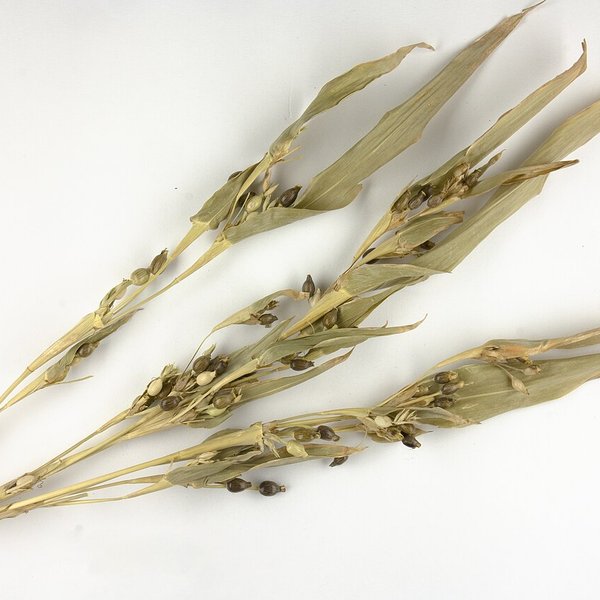 Image: Roger Culos via Wikimedia Commons (CC BY-SA 4.0)

What it does: Drains dampness, strengthens the spleen, clears heat. The primary food-grade dampness resolver. Flavor/nature: Sweet, bland, slightly cool Daily food therapy dose: 30–50g How to use: Soak overnight. Add to porridges, soups, or cook as a grain (like rice). Can be boiled into a tea (coix water) — a popular summer drink in China and Southeast Asia. Two types: Raw coix seed (sheng yi ren, 生薏仁) drains dampness and clears heat — better for damp-heat patterns. Dry-fried coix seed (chao yi ren, 炒薏仁) is less cooling and better for spleen-weak, cold-constitution individuals who need dampness drainage without the cooling effect (translated from Chinese) Chinese Pharmacopoeia — Coix Seed Monograph. Price: ¥10–20/500g ($1.40–2.80 USD)
16. Chen Pi/Aged Tangerine Peel (陈皮, chén pí)
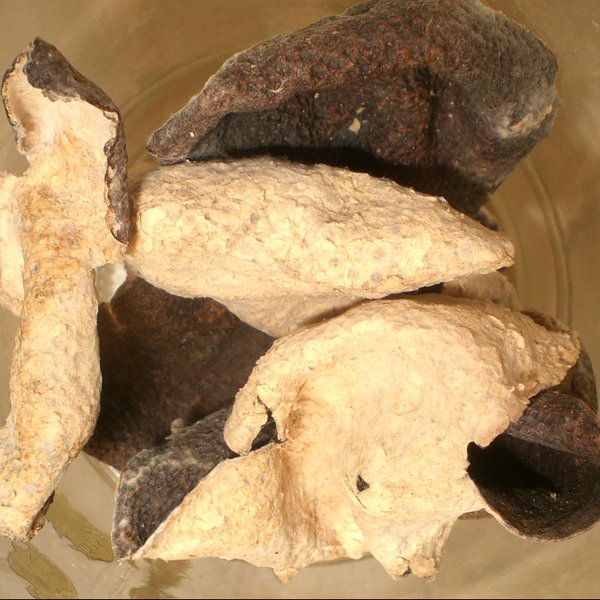 Image: Dboxes via Wikimedia Commons (CC BY-SA 3.0)

What it does: Regulates qi, dries dampness, strengthens the spleen, reduces nausea. The older it ages, the more potent and expensive it becomes. Flavor/nature: Pungent, bitter, warm Daily food therapy dose: 3–6g How to use: Soak in warm water for 15 minutes to soften. Scrape off any remaining white pith (bitter). Add to soups, porridges, and braised dishes. Commonly paired with red bean soup, winter melon soup, and pork bone broth. Can be steeped as tea. Aging matters: Fresh tangerine peel is barely medicinal. Chen pi aged 3+ years develops its therapeutic potency. Xinhui (新会) chen pi from Guangdong province, aged 10+ years, sells for ¥500–3,000/500g and is treated as a luxury ingredient. For food therapy, 3–5 year aged chen pi (¥30–60/500g) is perfectly adequate (translated from Chinese) Xinhui Chen Pi Industry Association. Price: ¥30–60/500g for 3-5 year aged ($4.20–8.40 USD)
The Heat Clearers (清热)
These ingredients cool internal heat and inflammation.
17. Chrysanthemum Flowers (菊花, jú huā)
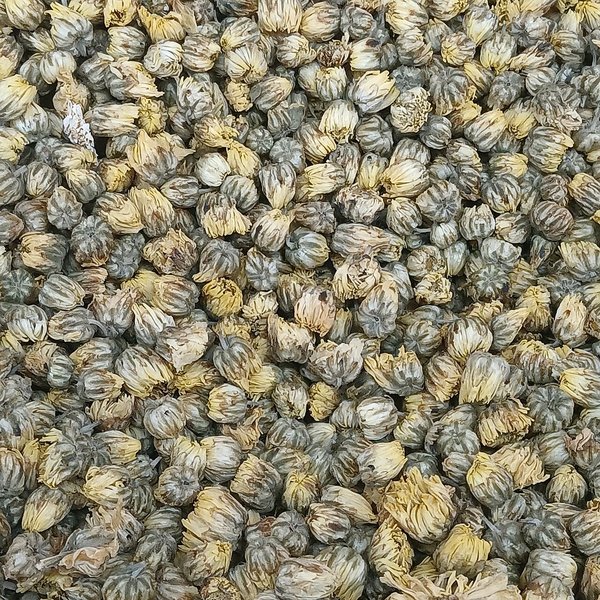 Image: Fumikas Sagisavas via Wikimedia Commons (CC0)
.jpg)
What it does: Clears wind-heat, brightens the eyes, cools the liver. The definitive eye-health herb in TCM. Flavor/nature: Sweet, bitter, slightly cool Daily food therapy dose: 5–10g (steeped as tea) How to use: Steep in hot water for 5–10 minutes. Drink as tea, 2–3 cups daily. Add to soups in the final minutes. Can be combined with goji berries for liver-eye nourishment (a classic TCM pairing). Two main varieties: Yellow chrysanthemum (hang ju, 杭菊, from Hangzhou) — sweeter, more eye-nourishing. White chrysanthemum (gong ju, 贡菊, "tribute chrysanthemum") — more cooling, better for heat-clearing. Either works for general use (translated from Chinese) Tongxiang Chrysanthemum Industry — Variety Comparison. If you want to build a full liver-supporting pantry around chrysanthemum, our guide to 10 TCM Foods for Liver Health: Translated From Chinese Medicine Texts lays out the most-used staples. Price: ¥30–50/500g ($4.20–7.00 USD)
18. Mung Beans (绿豆, lǜ dòu)
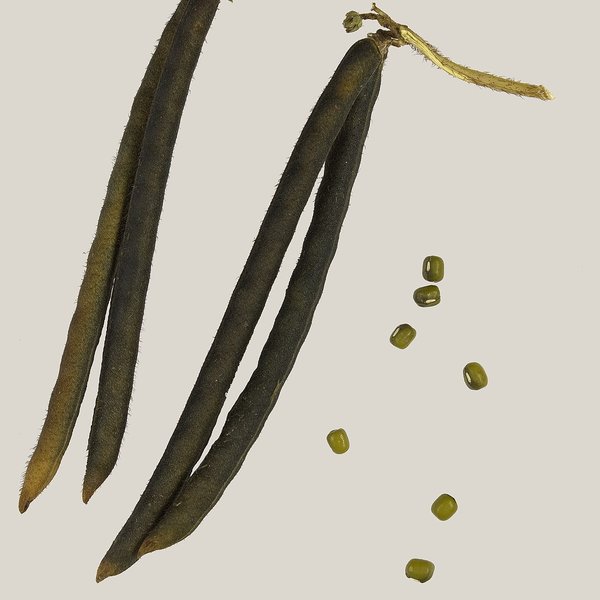 Image: Roger Culos via Wikimedia Commons (CC BY-SA 3.0)

What it does: Clears heat, detoxifies, relieves summer heat. The most important cooling food in the Chinese diet. Flavor/nature: Sweet, cool Daily food therapy dose: 30–50g How to use: Boil into mung bean soup (lǜ dòu tang) — boil mung beans in water until they split, add rock sugar. For maximum heat-clearing, consume the soup when beans are just beginning to split (retains more cooling compounds). For more nourishing effect, cook until completely soft. Summer essential: Mung bean soup is the default summer drink across China, serving the same cultural function as lemonade in the West — but with genuine heat-clearing therapeutic properties. Caution: Very cooling. People with cold constitutions or weak digestion should consume in moderation. Not recommended during menstruation for cold-constitution individuals (translated from Chinese) Chinese Nutrition Society — Mung Bean Nutritional Profile. Price: ¥8–15/500g ($1.10–2.10 USD)
The Versatile Essentials
These ingredients support multiple functions and appear in nearly every category of food therapy.
19. Rock Sugar (冰糖, bīng táng)
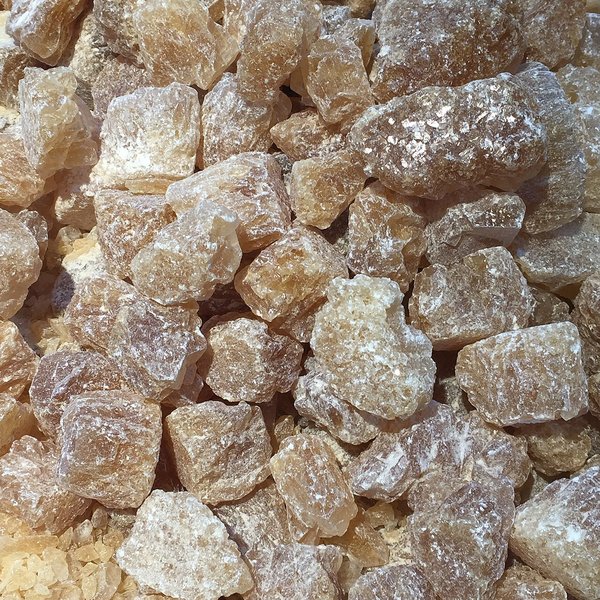 Image: Fumikas Sagisavas via Wikimedia Commons (CC0)
.jpg)
What it does: Moistens the lungs, harmonizes flavors, generates fluids. TCM considers rock sugar therapeutically distinct from white sugar — less damp-generating and actively moistening. Flavor/nature: Sweet, neutral How to use: Use in place of white sugar in any TCM dessert soup or tea. Dissolves slowly, providing sustained sweetness. Essential in white fungus soup, pear soup, and chrysanthemum tea. Avoid excessive amounts — even "therapeutic" sugar is still sugar. Price: ¥10–20/500g ($1.40–2.80 USD)
20. Shaoxing Wine (绍兴酒, shào xīng jiǔ)
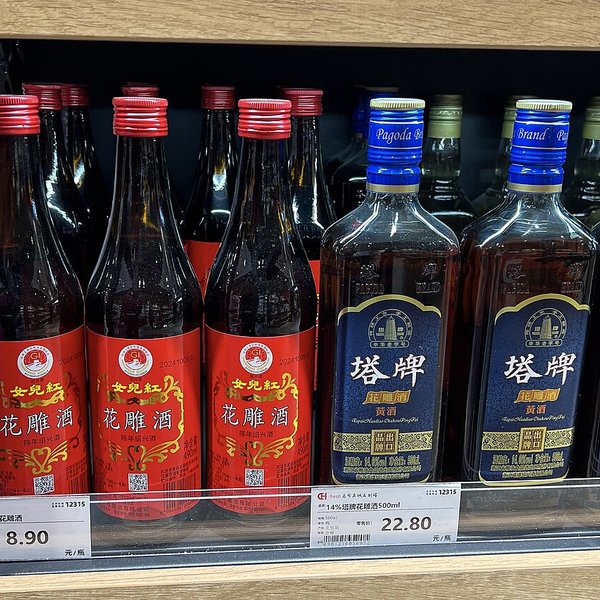 Image: N509FZ via Wikimedia Commons (CC BY-SA 4.0)
.jpg)
What it does: Activates blood circulation, disperses cold, removes gaminess from meats, acts as a "guide" (yao yin) that directs other ingredients' effects upward and outward. Flavor/nature: Sweet, pungent, warm How to use: Add 15–30ml to soups and stews during cooking. Essential for blanching meats (removes off-flavors). Used in virtually every Chinese herbal soup recipe. Can substitute with dry sherry if Shaoxing wine is unavailable (translated from Chinese) Shaoxing Rice Wine Industry Association. Price: ¥15–30/bottle ($2.10–4.20 USD)
The Complete Shopping List and Budget
| # | Ingredient | Amount | Est. Price (¥) | Est. Price ($) |
|---|---|---|---|---|
| 1 | Astragalus root | 250g | ¥25 | $3.50 |
| 2 | Codonopsis root | 250g | ¥20 | $2.80 |
| 3 | Chinese yam (dried) | 250g | ¥15 | $2.10 |
| 4 | Poria | 250g | ¥12 | $1.70 |
| 5 | Red dates | 500g | ¥20 | $2.80 |
| 6 | Goji berries | 250g | ¥20 | $2.80 |
| 7 | Dong quai | 250g | ¥35 | $4.90 |
| 8 | Longan fruit | 250g | ¥15 | $2.10 |
| 9 | White fungus | 100g | ¥15 | $2.10 |
| 10 | Lily bulb (dried) | 200g | ¥20 | $2.80 |
| 11 | Lotus seeds | 250g | ¥12 | $1.70 |
| 12 | Dried ginger | 100g | ¥5 | $0.70 |
| 13 | Cinnamon bark | 100g | ¥5 | $0.70 |
| 14 | Star anise | 100g | ¥5 | $0.70 |
| 15 | Coix seeds | 500g | ¥8 | $1.10 |
| 16 | Chen pi | 100g | ¥10 | $1.40 |
| 17 | Chrysanthemum flowers | 100g | ¥8 | $1.10 |
| 18 | Mung beans | 500g | ¥5 | $0.70 |
| 19 | Rock sugar | 500g | ¥8 | $1.10 |
| 20 | Shaoxing wine | 1 bottle | ¥15 | $2.10 |
| TOTAL | ¥298 | $41.70 |
Under $42 for a complete TCM pantry that will last months. Most of these dried ingredients won't need replenishing for 6–12 months of regular cooking.
Where to Buy
In China: Any traditional Chinese medicine pharmacy (zhong yao fang, 中药房) will carry all 20 items. Tong Ren Tang (同仁堂) is the most reputable chain (360+ years of operation). Supermarkets carry items 3, 5, 6, 8, 14, 15, 18, 19, and 20 in the dry goods aisle.
In Western countries: Chinese grocery stores stock 12–15 of these items. For the remaining herbs (astragalus, codonopsis, dong quai, poria, chen pi), visit a Chinese herbal pharmacy or order online from Kamwo Meridian Herbs (NYC), Spring Wind Herbs, or Amazon.
Quality tip: Buy from herbal pharmacies rather than supermarkets for medicinal herbs (items 1, 2, 4, 7, 12, 16). Herbal pharmacies source from established supply chains with quality testing. Supermarket herb sections may stock lower-grade products (translated from Chinese) Tong Ren Tang — Quality Sourcing Standards. For a translated comparison of the names Chinese pharmacies actually stock, see our roundup of the Best TCM Herbal Brands Translated From Chinese Pharmacies [2026].
Frequently Asked Questions
Can I use these ingredients if I'm not following TCM theory?
Yes. Most of these are simply nutritious foods — beans, dried fruits, mushrooms, roots. You don't need to understand qi or blood deficiency to benefit from mung bean soup on a hot day or goji berries in your oatmeal. TCM theory provides a framework for targeted use, but the ingredients are beneficial regardless of theoretical framework.
Are there any ingredients I should avoid combining?
At culinary doses, combining any of these 20 ingredients is safe. TCM contraindication rules (shiba fan, eighteen incompatibles, shijiu wei, nineteen fears) apply to high-dose herbal prescriptions, not food therapy. The one practical note: don't combine strongly warming ingredients (dried ginger, cinnamon) with strongly cooling ingredients (mung beans, chrysanthemum) in the same dish — they'll work against each other and the dish will taste confused.
How do I know which ingredients I need most?
Start with the basics that benefit nearly everyone: red dates, goji berries, astragalus, and coix seeds. These four cover qi tonification, blood nourishment, and dampness drainage — the most common deficiency patterns. As you learn more about your constitution (or consult a TCM practitioner), add targeted ingredients from the relevant categories.
Do these ingredients lose potency over time?
Dried herbs and roots maintain potency for 1–3 years when stored properly (sealed, cool, dry, dark). Aromatic ingredients (chen pi, chrysanthemum, star anise) lose potency faster because their volatile oils evaporate — use within 1 year. Red dates, goji berries, and longan should be checked for moisture and mold every few months. Coix seeds and mung beans are grains and last indefinitely when dry.
Can children eat these ingredients?
Most are safe for children over 5 at reduced portions (half adult doses). Strongly warming herbs (dried ginger, cinnamon) should be used sparingly for children. Dong quai is generally not given to children unless prescribed by a TCM practitioner. Red dates, goji berries, lotus seeds, lily bulb, and white fungus are all commonly used in children's food therapy in China.
Sources
- Chinese Pharmacopoeia 2020 Edition — Herbal Monographs (translated from Chinese)
- Beijing University of Chinese Medicine — Food Therapy Textbook (translated from Chinese)
- Nanjing University of Chinese Medicine — Materia Medica Comparison Studies (translated from Chinese)
- China Pharmaceutical University — Herb Storage Research (translated from Chinese)
- Chinese Nutrition Society — Functional Food Analysis (translated from Chinese)
- National Health Commission — Medicine-Food Dual Use List (translated from Chinese)
- Tong Ren Tang — Quality Standards (translated from Chinese)
- Ningxia Goji Berry Industry Association (translated from Chinese)
- Xinhui Chen Pi Industry Association (translated from Chinese)
Related Reading
- Best Chinese Herb Shops for TCM Ingredients
- Chinese Cooking Herbs: A TCM Ingredient Reference Guide
- Astragalus Chicken Soup: Immune-Boosting TCM
— The Yao Shan Guide Team