Longan Fruit in TCM: The Blood-Nourishing, Heart-Calming Berry (Translated from Chinese)
This article is for informational and educational purposes only. It is translated and adapted from Chinese-language sources on traditional Chinese medicine (TCM) dietary theory. Nothing here constitutes medical or nutritional advice. Always consult a qualified healthcare provider before making changes to your diet or health regimen.
This article is for informational and educational purposes only. It is translated and adapted from Chinese-language sources on traditional Chinese medicine (TCM) dietary theory. Nothing here constitutes medical or nutritional advice. Always consult a qualified healthcare provider before making changes to your diet or health regimen.
Quick Answer
- Longan (龙眼, lóng yǎn), also called gui yuan (桂圆) when dried, is one of TCM's most important blood-nourishing and spirit-calming fruits. It enters the heart and spleen channels and has been used for over 2,000 years for insomnia, anxiety, fatigue, and anemia.
- TCM classification: Warm in nature, sweet in flavor, enters the heart and spleen channels. Primary actions: tonifies heart blood, strengthens spleen qi, calms the spirit, and improves memory.
- Fresh vs. dried: Fresh longan (龙眼) is eaten as fruit and is mildly warming. Dried longan flesh (桂圆肉) is the medicinal form — more concentrated, sweeter, and significantly more potent as a blood tonic. CCTV health programming has noted that "one longan contains three medicines" (一颗桂圆三味药).
- Key nutrients: High in glucose and sucrose (65% of dried weight), iron (2.2mg/100g dried), vitamin C (43mg/100g fresh), and bioactive polysaccharides with documented immunomodulatory effects.
Longan vs. Gui Yuan: What's the Difference?
This confuses even many Chinese people. Longan (龙眼) and gui yuan (桂圆) are the same fruit — Dimocarpus longan. But the terms are used differently:
- 龙眼 (longan) typically refers to the fresh fruit, eaten as a snack. Available July–September in southern China.
- 桂圆 (gui yuan) typically refers to the dried flesh (桂圆肉), used in cooking and TCM preparations. Available year-round.
The distinction matters for food therapy. Fresh longan has higher vitamin C but lower sugar concentration and milder therapeutic effect. Dried gui yuan has concentrated sugars, more concentrated active compounds, and stronger blood-nourishing properties. Most TCM recipes call for dried gui yuan.
The name "龙眼" literally means "dragon's eye" — when you peel a longan, the translucent white flesh with the dark seed inside does resemble a dragon's eye. The name "桂圆" derives from Guangxi province (桂), a major growing region.
TCM Therapeutic Properties
Tonifies Heart Blood and Calms the Spirit (补心血、安神)
This is longan's crown function. In TCM, the heart "houses the spirit" (心主神明). When heart blood is insufficient, the spirit becomes unanchored — manifesting as insomnia, anxiety, palpitations, poor concentration, and excessive dreaming.
Longan directly nourishes heart blood, anchoring the spirit. The Bencao Gangmu states: "Longan flesh is a top-grade tonic for the heart and spleen. It nourishes the blood and calms the spirit."
The famous TCM formula "归脾汤" (Gui Pi Tang / Spleen-Returning Decoction), one of the most commonly prescribed formulas for insomnia and anxiety, contains longan as a key ingredient alongside astragalus, dang gui, and sour date seed. A 2019 systematic review in Phytomedicine analyzed 23 clinical trials (n=2,157) of Gui Pi Tang and found statistically significant improvements in both sleep quality (Pittsburgh Sleep Quality Index improved by 3.2 points) and anxiety scores compared to controls.
Strengthens Spleen Qi (益脾气)
Longan's warm, sweet nature directly tonifies the spleen. This makes it useful for fatigue, poor appetite, and loose stools — the classic signs of spleen qi deficiency.
The spleen-strengthening and heart-nourishing functions work together in TCM theory: the spleen generates blood (脾生血), and that blood nourishes the heart. By strengthening the spleen's blood-producing capacity while directly nourishing heart blood, longan addresses the root (spleen weakness) and the branch (heart blood deficiency) simultaneously.
Nourishes Blood (补血)
Longan is classified as one of TCM's primary blood-nourishing foods, alongside red dates, dang gui, and goji berries.
Dried longan flesh contains 2.2mg iron per 100g, plus significant glucose that TCM considers directly nourishing to the blood. A 2020 study in Journal of Functional Foods found that longan polysaccharides stimulated erythropoiesis (red blood cell production) in bone marrow cell cultures by 28% — providing a mechanism beyond simple iron content for the "blood-nourishing" claim.
The classic blood deficiency pattern — pale complexion, dizziness, dry skin, scanty menstruation, brittle nails — is one of longan's primary indications. TCM practitioners often combine longan with red dates and dang gui for maximum blood-building effect.
Improves Memory and Cognitive Function (益智)
Longan is one of the few TCM foods traditionally claimed to enhance intelligence and memory. The Shennong Bencao Jing classifies it as "益智" (intelligence-boosting).
Modern research provides some support:
- A 2018 study in Food & Function found that longan polysaccharides improved spatial memory in aging mice by 22% through reducing hippocampal oxidative damage
- A 2021 study in Nutrients showed longan seed extract protected neurons against amyloid-beta toxicity (relevant to Alzheimer's disease) in cell models
- Longan contains significant levels of gallic acid and ellagic acid — polyphenols with documented neuroprotective activity
These are preliminary findings (animal and cell studies only), but they align directionally with the traditional claim.
Nutritional Profile
Fresh Longan (per 100g edible portion)
| Nutrient | Amount | % Daily Value |
|---|---|---|
| Calories | 60 kcal | 3% |
| Carbohydrates | 15.2g | 5% |
| Protein | 1.3g | 3% |
| Fiber | 1.1g | 4% |
| Vitamin C | 43mg | 48% |
| Potassium | 266mg | 6% |
| Iron | 0.3mg | 2% |
| Phosphorus | 30mg | 4% |
Dried Longan / Gui Yuan (per 100g)
| Nutrient | Amount | % Daily Value |
|---|---|---|
| Calories | 273 kcal | 14% |
| Carbohydrates | 65.4g | 22% |
| Protein | 5.6g | 11% |
| Fiber | 2.0g | 7% |
| Iron | 2.2mg | 12% |
| Potassium | 524mg | 11% |
| Phosphorus | 118mg | 17% |
| Vitamin B1 | 0.01mg | 1% |
Key observation: drying concentrates iron, potassium, and protein by approximately 4–7x compared to fresh fruit, while vitamin C is largely lost. This is why TCM uses dried gui yuan for blood-nourishing purposes (iron concentration) and fresh longan as a seasonal fruit.
8 Classic Longan Recipes from Chinese Food Therapy
1. Longan, Red Date, and Egg Tea (桂圆红枣鸡蛋茶)
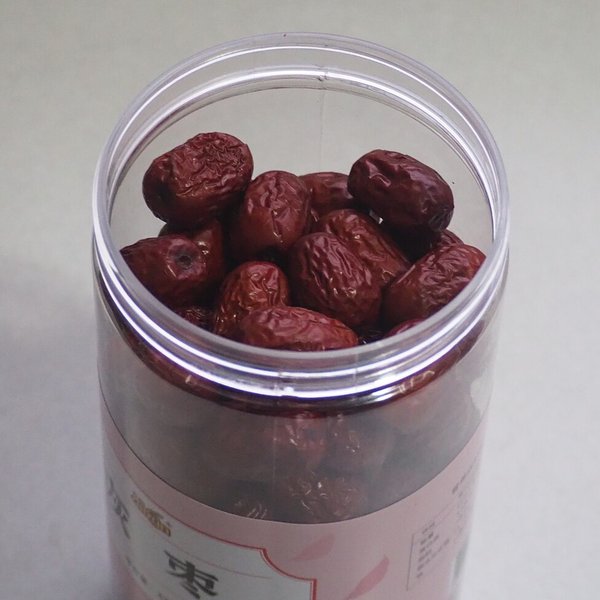 Image: Photo by David J. Stang via Wikimedia Commons (CC BY-SA 4.0)

Perhaps the most commonly consumed longan preparation in Chinese households.
Ingredients: Dried longan flesh 30g, red dates 8, eggs 2, brown sugar 20g, water 500ml.
Method: Simmer longan and dates in water for 10 minutes. Crack eggs into the simmering liquid (poach them whole, or beat first for egg-drop style). Cook 5 minutes. Add brown sugar. Serve warm.
TCM function: Tonifies qi and blood, calms the spirit. The eggs add protein and blood-nourishing properties. Brown sugar warms the middle and invigorates blood. This preparation is traditionally given to women during menstruation and postpartum recovery.
2. Longan and Goji Berry Congee (桂圆枸杞粥)
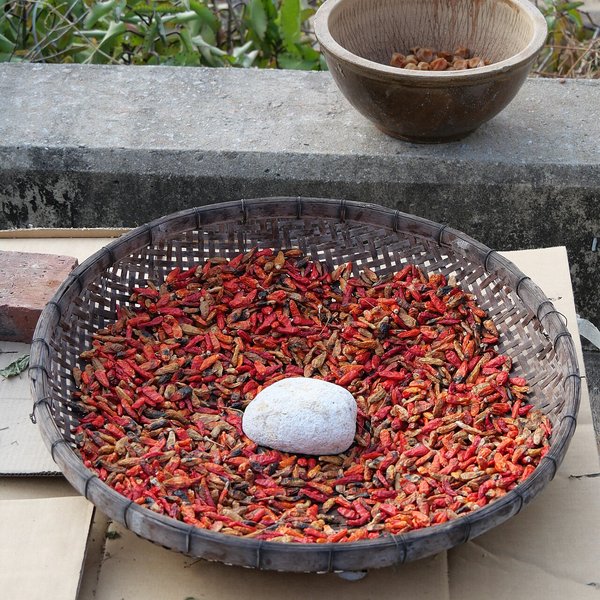 Image: Peachyeung316 via Wikimedia Commons (CC BY-SA 4.0)

Ingredients: Dried longan 15g, goji berries 15g, rice 100g, rock sugar to taste.
Method: Cook rice congee until thick (about 1 hour). Add longan and goji berries in the last 15 minutes. Season with rock sugar.
TCM function: Nourishes liver and kidney (goji), tonifies heart and spleen (longan), generates fluids (congee). An ideal breakfast congee for people with qi-blood deficiency — fatigue, pale complexion, poor memory.
3. Gui Pi Tea (桂圆莲子芡实茶)
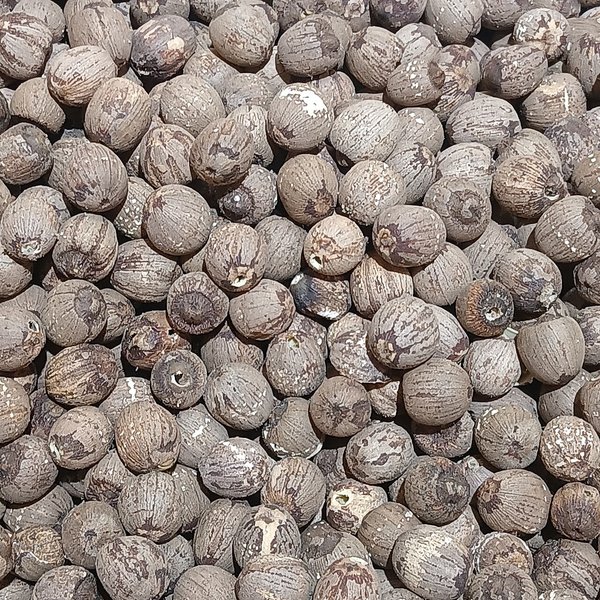 Image: Fumikas Sagisavas via Wikimedia Commons (CC0)
.jpg)
A simplified version of the famous Gui Pi Tang formula, adapted for daily food therapy.
Ingredients: Dried longan 10g, lotus seeds 10g, euryale seeds (芡实) 10g, red dates 5, water 600ml.
Method: Simmer all ingredients in water for 30 minutes. Drink as tea, eat the ingredients. Can be refilled with hot water 2–3 times.
TCM function: Strengthens spleen, nourishes heart, astringes essence. Lotus seed and euryale seed add astringent properties that prevent "leaking" of qi and essence — addressing night sweats, loose stools, and frequent urination alongside the heart-calming, blood-nourishing effects of longan.
4. Longan and Pork Heart Soup (桂圆猪心汤)
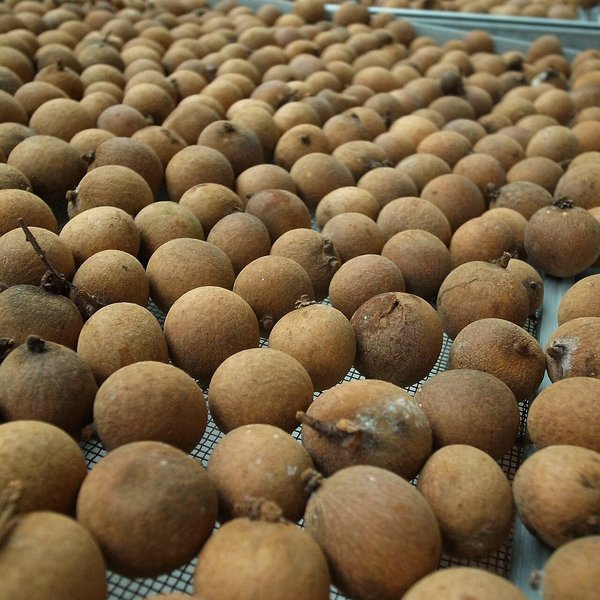 Image: Kiwi He via Wikimedia Commons (CC BY-SA 2.0)

Ingredients: Dried longan 20g, pork heart 1, ginger 3 slices, salt to taste.
Method: Clean pork heart thoroughly (slice open, remove blood vessels, soak in water 30 minutes). Slice. Blanch. Simmer pork heart, longan, and ginger in water for 1.5 hours. Season with salt.
TCM function: In TCM, "以形补形" (treat the organ with the same organ) — pork heart directly nourishes the heart. Combined with longan's heart-blood tonifying effect, this is a powerful preparation for palpitations, anxiety, and insomnia from heart blood deficiency. A traditional Cantonese medicinal soup.
5. Eight Treasure Tea with Longan (桂圆八宝茶)
Image: Kiwi He via Wikimedia Commons (CC BY-SA 2.0)
Ingredients: Dried longan 5 pieces, red dates 3, goji berries 10, chrysanthemum flowers 3, rock sugar 1 piece, green tea or no tea base.
Method: Place all ingredients in a large cup or thermos. Pour boiling water over. Steep 10 minutes. Drink throughout the day, refilling with hot water.
TCM function: A well-balanced daily tonic tea. The longan and dates provide warming, blood-nourishing action. The chrysanthemum provides a cooling, heat-clearing counterbalance. The goji adds liver-kidney nourishment. The balance of warming and cooling makes this suitable for most constitutions.
6. Longan, Lotus Seed, and White Fungus Soup (桂圆莲子银耳汤)
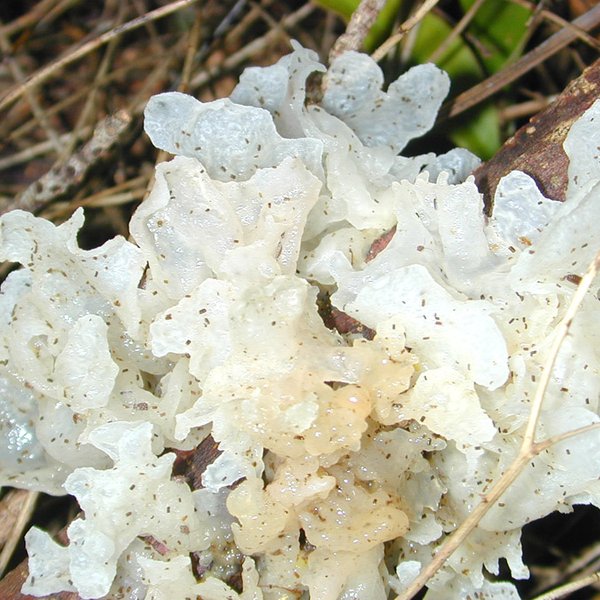 Image: Eric Guinther via Wikimedia Commons (CC BY-SA 3.0)

Ingredients: Dried longan 15g, lotus seeds 30g, dried tremella mushroom 15g, goji berries 10g, rock sugar to taste.
Method: Soak tremella 1–2 hours. Soak lotus seeds 2 hours. Simmer tremella alone for 1 hour. Add lotus seeds and longan, cook 30 minutes. Add goji and rock sugar.
TCM function: A comprehensive yin-and-blood tonic dessert. Tremella moistens yin (cools), longan warms and nourishes blood (warms). The combination is balanced — neither too hot nor too cold. Excellent for skin health and general anti-aging.
7. Longan Wine (桂圆酒)
Image: Kiwi He via Wikimedia Commons (CC BY-SA 2.0)
Ingredients: Dried longan flesh 200g, rock sugar 50g, rice wine or mild baijiu 1 liter.
Method: Place longan and rock sugar in a clean glass jar. Pour wine over. Seal tightly. Store in cool, dark place for 1–3 months. Shake occasionally. Drink 20–30ml once daily.
TCM function: Warms the channels, nourishes blood, calms the spirit. A traditional winter tonic, especially for elderly people with cold constitutions and insomnia. Note: alcohol is contraindicated for people with damp-heat constitution, liver conditions, or those taking medications.
8. Longan and Chinese Yam Chicken Soup (桂圆山药鸡汤)
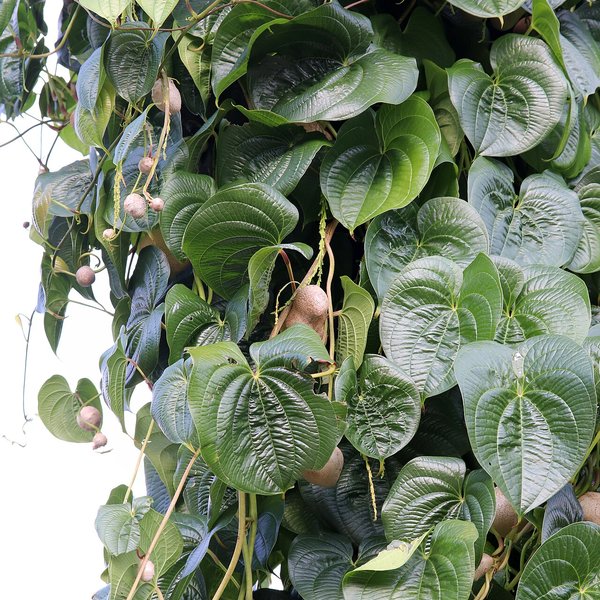 Image: Don McCulley via Wikimedia Commons (CC BY-SA 4.0)

Ingredients: Dried longan 15g, Chinese yam 200g, chicken half, red dates 6, goji 10g, ginger 3 slices.
Method: Blanch chicken. Combine all ingredients in clay pot with 2 liters water. Simmer 2 hours on low heat. Season with salt.
TCM function: A comprehensive tonic addressing spleen, heart, and kidney simultaneously. The yam strengthens the spleen (digestion), longan nourishes heart blood (sleep, mood), chicken tonifies qi, and goji adds liver-kidney nourishment. A well-designed recipe for general debility, postpartum recovery, or seasonal tonification.
Who Should Avoid or Limit Longan
Longan is warm and sweet — which means it's not right for everyone:
- Internal heat/fire patterns: People who feel hot, have red faces, dry mouth, constipation, irritability, or a red tongue with yellow coating should avoid or minimize longan. The warming nature will add fuel to existing heat.
- Damp-heat constitution: Longan's sweet, sticky nature can generate dampness and heat. People with damp-heat patterns should choose cooling alternatives.
- Pregnancy: TCM traditionally advises pregnant women to avoid longan. The reasoning: pregnancy is a naturally warm state (the growing fetus generates heat), and adding more warming foods can create excess heat. This caution is widely followed in Chinese culture, though it's not supported by Western obstetric evidence.
- Diabetes: Dried longan is 65% sugar. Monitor blood glucose carefully if consuming. Limit to 5–8 pieces per day.
- Gum inflammation, mouth ulcers, acne flares: These are signs of excess heat in TCM. Longan will worsen them.
Traditional dosage: 10–15g dried longan flesh per day for food therapy. In formal TCM prescriptions, dosages range from 10–25g. Not recommended for continuous daily use exceeding 2–3 weeks without practitioner guidance — rotate with other blood-nourishing foods like red dates and goji berries.
Growing Regions and Quality Selection
Major Growing Regions
China produces approximately 2.1 million tons of longan annually (2023 data). The major growing regions, each with distinct characteristics:
- Guangdong (广东): The largest producing province. Shiqiao longan from Panyu is considered premium. Balanced sweetness, large fruit, thin seed.
- Fujian (福建): Known for dried longan (gui yuan). Putian longan is especially prized for drying — the flesh is dense and retains texture well after drying.
- Guangxi (广西): High volume production. Generally good quality but less prestigious than Guangdong or Fujian varieties.
- Thailand: The dominant export variety for Western markets. Thai longan tends to be sweeter but with less complex flavor than Chinese varieties.
Selecting Quality Dried Longan
- Color: Should be golden-brown, not black or overly dark (indicates old stock or improper drying)
- Texture: Should be slightly sticky and chewy, not rock-hard or wet
- Smell: Sweet, honey-like aroma. No musty, sour, or chemical smell
- Flesh-to-seed ratio: Higher quality has thicker flesh and smaller seeds
- Intact pieces: Whole, unbroken pieces indicate careful processing
Storage
- Dried longan keeps 6–12 months in an airtight container at room temperature
- Refrigerate for extended storage (up to 18 months)
- Freeze for 2+ years
- Check periodically for moisture or mold — discard if either appears
Frequently Asked Questions
How many dried longan pieces should I eat per day? TCM generally recommends 10–15g per day, which is roughly 8–12 pieces of dried longan flesh. Going significantly over this amount may generate excess heat or dampness. People with heat constitutions should stay on the lower end or rotate with cooling blood tonics.
Is longan better than lychee? They're closely related botanically and both are warm and sweet, but TCM considers them therapeutically different. Longan enters the heart and spleen — it's better for insomnia, anxiety, blood deficiency, and cognitive function. Lychee enters the liver and spleen — it's better for qi circulation and pain. Longan is the blood-and-spirit herb; lychee is the qi-moving herb. For food therapy purposes, longan is more versatile.
Can I eat longan at night for sleep? Yes, this is actually the traditional timing. Longan tea or longan congee consumed 1–2 hours before bed is a common TCM sleep remedy. The heart-blood nourishing and spirit-calming effects are most useful when the body is preparing for rest. Avoid very sweet preparations close to bedtime — the sugar may have a stimulating effect.
Is canned longan as effective as dried? No. Canned longan is primarily a dessert/snack product. The heavy sugar syrup, heat processing, and long shelf time significantly reduce the bioactive polysaccharide content. For food therapy purposes, use dried gui yuan from TCM shops or fresh longan in season.
What's the difference between longan and longan seed in TCM? Longan flesh (桂圆肉) nourishes blood and calms the spirit. Longan seed (龙眼核) is a completely different medicine — it's astringent and stops bleeding, traditionally used for traumatic bleeding and as a topical treatment for wounds. The seed is not used in food therapy. When recipes call for "longan," they always mean the flesh.
Sources
- Wuhu Municipal TCM Hospital: Longan — Heart-Spleen Tonic
- TCM World (中医世家): Longan Flesh Materia Medica
- CCTV News: One Longan Contains Three Medicines
- Zhihu: How to Eat Gui Yuan to Nourish Blood Without Causing Heat
- China Economic Net: Gui Yuan vs Longan — Different Health Functions
- RMZX (People's Political Consultative Conference): Gui Yuan Benefits Memory But Six Groups Should Avoid
- Jining Municipal Government: Longan — Summer's Most Nourishing Fruit
Related Reading
- Blood Deficiency: What TCM Recommends
- Chinese Food Therapy for Sleep: What to Eat for Better Rest
- Qi-Building Foods: What to Eat When Chinese Medicine Says You're Qi-Deficient
— The Yao Shan Guide Team